RSV Explained: Symptoms in Babies and Adults and the UK Vaccine
Advertisement
Respiratory syncytial virus, almost always shortened to RSV, is one of the most common infections in the world and one of the least well known outside maternity wards and paediatric units. Nearly every child catches it by the age of two. In most of them it looks like an ordinary cold. In a small but significant minority and in older adults, it causes something considerably more serious. The UK has recently started vaccinating against it, which is why the name has begun appearing in places it never used to.
What RSV is
RSV is a respiratory virus that spreads the same way as colds and flu, through droplets from coughs and sneezes and through contaminated hands and surfaces. It circulates mainly between autumn and early spring in the UK, usually peaking in December. Because immunity to it is incomplete and short-lived, people are reinfected throughout life, with each infection typically milder than the first.
The important feature of RSV is where it settles. In older children and adults it tends to stay in the upper airway and behaves like a cold. In infants it can move down into the smallest airways of the lungs, the bronchioles, causing them to become inflamed and clogged. That condition is bronchiolitis and it is the reason RSV is the single largest cause of infant hospital admission in the UK each winter.
Symptoms in babies and young children
RSV in a baby usually starts unremarkably, with a runny nose, a mild cough and sometimes a slight temperature. If it progresses to bronchiolitis, the change typically happens on day three to five of the illness, which is the pattern parents most need to know. The cough becomes more persistent, breathing gets faster and noisier, often with a wheeze or a crackle and feeding becomes difficult because a baby who is working hard to breathe cannot easily suck and swallow at the same time.
The signs that a baby's breathing is becoming laboured are specific and worth recognising. Look for the skin pulling in between or under the ribs with each breath, a rapid rate, flaring nostrils, a short grunt at the end of each breath and pauses in breathing. Reduced feeding and fewer wet nappies matter too, because they indicate the effort of breathing is affecting everything else. Bronchiolitis often sounds alarming and resolves on its own over one to three weeks, so the point of watching is not to panic but to catch the minority who need support with feeding or oxygen.
Babies born prematurely, those with congenital heart disease or chronic lung problems and those under about three months old are at higher risk of a severe episode. The NHS bronchiolitis pages set out the red flags in detail and it is worth reading them before a winter with a young baby rather than during one.
Symptoms in adults
Most adults who catch RSV have what they assume is an ordinary cold: blocked nose, sore throat, cough, tiredness, perhaps a mild fever. Almost no one is tested, so almost no one knows. The picture changes with age and with lung or heart conditions. In older adults RSV can cause pneumonia, can trigger serious flare-ups of chronic obstructive pulmonary disease or asthma and can destabilise heart failure. UK estimates put RSV behind thousands of hospital admissions and a meaningful number of deaths in adults over 75 each winter, which is why it was reclassified in the public mind from a children's illness to a problem across both ends of the age range.
There is no way to distinguish RSV from other winter viruses by symptoms alone in an adult and for most people it makes no practical difference. Care is the same supportive approach that applies to any viral respiratory infection, much as we described for managing respiratory symptoms at home.
The UK RSV vaccination programme
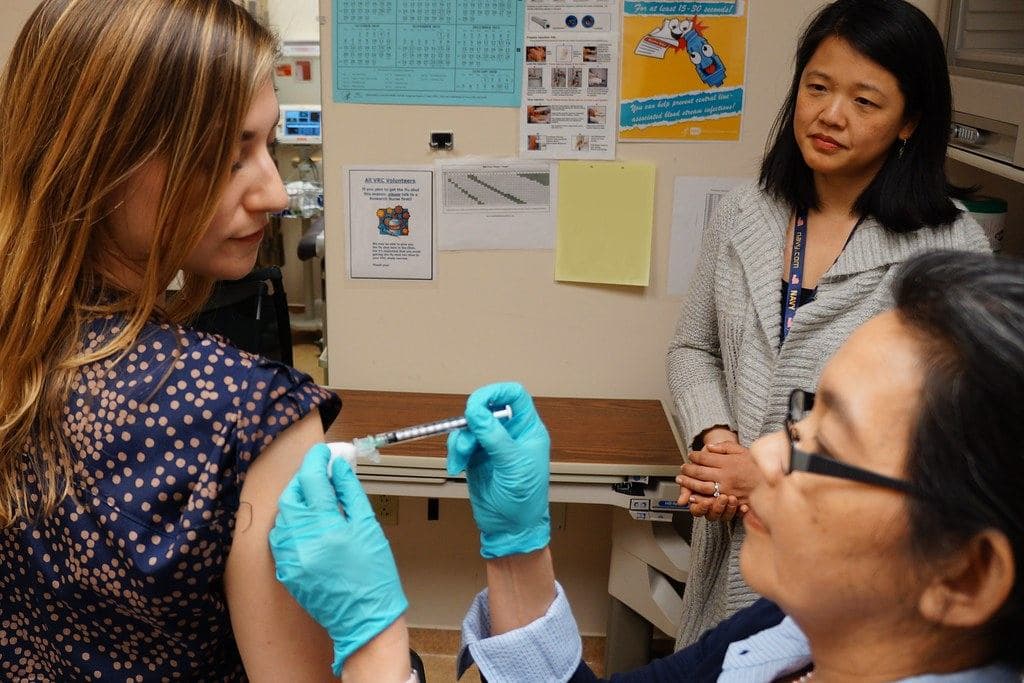
The NHS introduced routine RSV vaccination in 2024 and it works in two quite different ways depending on who is being protected.
Pregnant women are offered the vaccine from 28 weeks of pregnancy. The point is not primarily to protect the mother but to protect the baby: antibodies cross the placenta in the final weeks, so the newborn arrives with borrowed protection through the months when bronchiolitis risk is highest. This is the same principle behind the whooping cough vaccine in pregnancy and it is why the timing is specified rather than left open. Having it from 28 weeks allows enough time for antibody transfer before birth.
Older adults are offered a single dose around their 75th birthday, with a catch-up for those already older when the programme started. Unlike flu, this is not currently an annual jab. The evidence so far suggests protection lasts across more than one season, so the programme is built as a one-off dose rather than a yearly campaign, though that could change as longer-term data arrives.
Separately, a long-acting antibody treatment is used for a small number of infants at very high risk, such as some babies born very prematurely or with significant heart or lung disease. That is a hospital-led decision rather than something to request. Current eligibility for all of these sits on the NHS RSV vaccine pages.
Advertisement
Reducing the risk at home
RSV spreads readily in households and a newborn's most likely source is an older sibling with a cold. The measures that help are unglamorous and effective: wash hands before handling a baby, keep anyone with cold symptoms from kissing or holding a very young infant where that is possible, do not smoke around children, since smoke exposure clearly worsens bronchiolitis and breastfeed if you can, which offers some protective benefit. Keeping a newborn away from crowded indoor places during peak RSV season is a reasonable precaution in the first couple of months.
How RSV differs from flu and COVID-19
All three are respiratory viruses that circulate in winter and produce overlapping symptoms, which is why the NHS now tracks them together. The differences that matter in practice are about who gets seriously ill and what protection exists. Flu hits hard across a broad age range and has an annual vaccine. COVID-19 is now largely a problem for older and clinically vulnerable people, with seasonal boosters aimed at them. RSV is sharply concentrated at the two ends of life, with a maternal vaccine for infants and a one-off dose at 75. Wheeze and laboured breathing in a baby under a year old is the clue that most points towards RSV rather than the other two.
When to get help
For a baby, contact your GP or call NHS 111 if they are feeding less than half their usual amount, have had a dry nappy for twelve hours, are breathing faster than normal or seem unusually tired or irritable. Call 999 if they are having real difficulty breathing, if there are pauses in their breathing, if their skin, tongue or lips look blue, grey or mottled, or if they are difficult to wake. For an adult, seek urgent help for breathlessness at rest, chest pain, confusion or a rapid deterioration. If you are unsure which service to use, our guide to 111, pharmacies and A&E sets out the options.
A quick recap
RSV is a common winter virus that nearly all children catch by two. In most people it is a cold, while in infants it can cause bronchiolitis and in older adults pneumonia or a serious flare of existing lung or heart disease. Bronchiolitis typically worsens around day three to five, so watch breathing effort and feeding. The NHS vaccinates pregnant women from 28 weeks to protect the newborn and adults around 75 with a single dose.
Frequently asked questions
Is RSV the same as bronchiolitis?
No. RSV is the virus and bronchiolitis is the lung condition it commonly causes in babies. Other viruses can cause bronchiolitis too, though RSV is the most frequent cause.
Can adults catch RSV from their children?
Yes, readily and household transmission is very common. In most adults it produces cold-like symptoms that are never identified as RSV.
Is the RSV vaccine in pregnancy safe?
It is offered routinely by the NHS from 28 weeks on the basis of trial and surveillance data. As with any vaccine you can discuss it with your midwife, though the recommendation reflects a favourable balance of benefit against risk for both mother and baby.
Do I need the RSV vaccine every year like flu?
Not at present. The older adult programme is a single dose rather than an annual one, because protection appears to last beyond one season.
How long does RSV last?
Cold-like symptoms usually settle within one to two weeks. Bronchiolitis in a baby often takes two to three weeks to resolve fully, with the cough lasting longest.
Can you be tested for RSV?
Testing exists and is used in hospital, particularly for unwell infants and older adults. It is not routinely available to the public and for mild illness it would not change treatment.
Can you catch RSV more than once?
Yes. Immunity is incomplete and wanes, so reinfection through life is normal. Later infections are usually milder than the first.
Advertisement