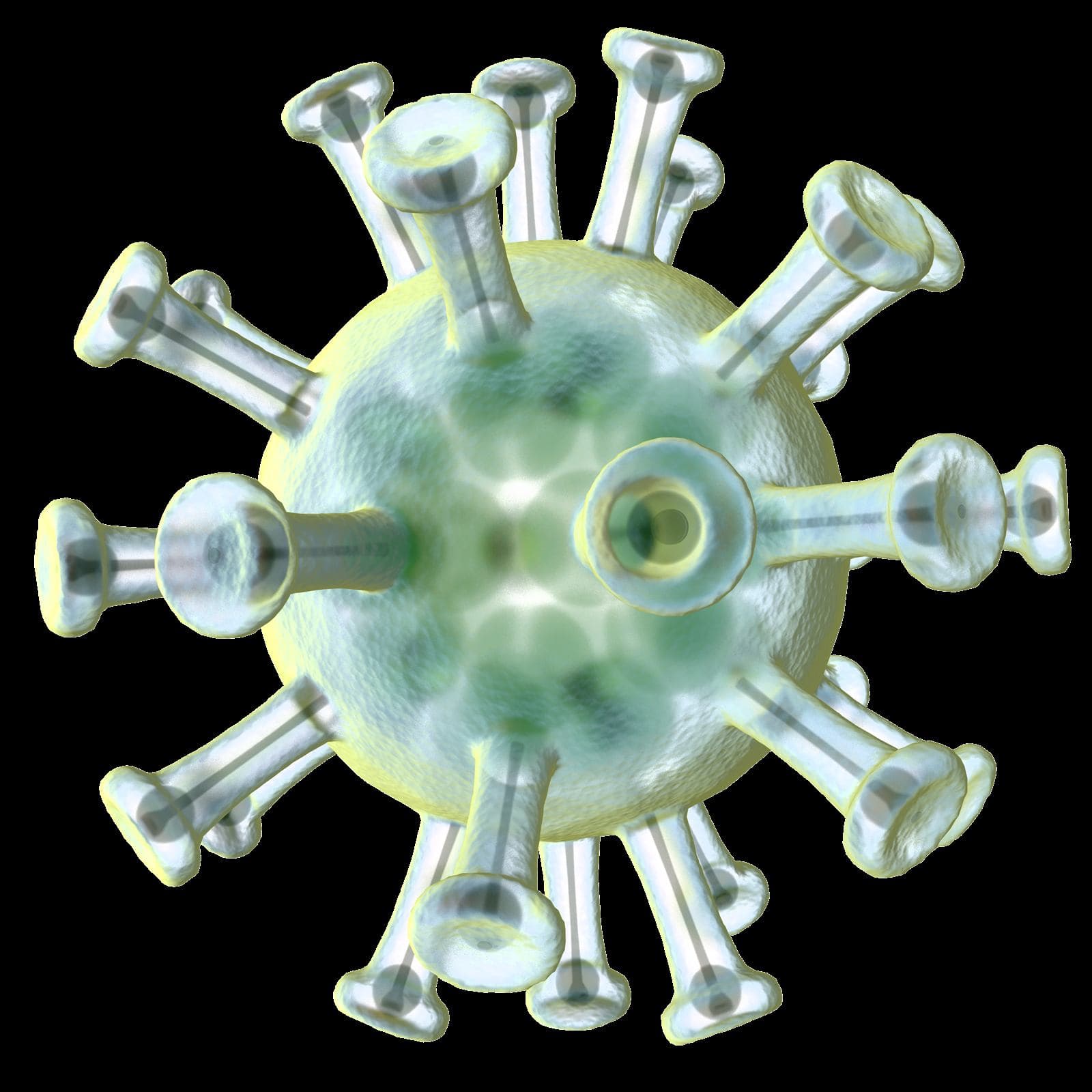
NB.1.8.1 ("Nimbus"): The Other COVID Variant Circulating in 2026
Advertisement
Alongside XFG, another lineage called NB.1.8.1, commonly nicknamed "Nimbus" in media reporting, has been among the most frequently detected COVID-19 variants in the UK during the 2025 to 2026 season. Together, these two lineages have made up a large share of sequenced cases tracked by UKHSA in recent surveillance reports.
Where NB.1.8.1 came from
NB.1.8.1 is, like XFG, a descendant of the Omicron lineage of SARS-CoV-2. Its naming follows the standard scientific nomenclature used to track coronavirus evolution, with the informal nickname "Nimbus" coined by variant trackers and picked up by media outlets, similar to how earlier variants such as "Kraken" or "Arcturus" were informally named. These nicknames aren't official World Health Organization designations, but they've become a common shorthand in public reporting.
Symptoms associated with NB.1.8.1
Symptoms reported with NB.1.8.1 broadly resemble those seen with other recent Omicron-descended variants: sore throat, cough, fatigue, fever and general body aches. Some early reports noted a particularly prominent sore throat among people testing positive with this lineage, though this hasn't been established as a distinctive or reliable enough symptom to differentiate it from other variants without testing.
How it compares to XFG
NB.1.8.1 and XFG have circulated alongside one another rather than one clearly replacing the other and UKHSA surveillance data shows their relative prevalence shifting over successive reporting weeks. Neither has been associated with more severe illness than the other based on current evidence and both appear to share the enhanced transmissibility that has become a general feature of the Omicron lineage's more recent descendants.
Should you be worried about a new variant?
New variant names appearing in the news can understandably cause concern, but it's worth keeping in context that SARS-CoV-2 has continued to evolve incrementally since 2020, in the same way flu viruses evolve every year. The emergence of a new named lineage isn't automatically a sign of increased danger. Health authorities including UKHSA and the World Health Organization continuously monitor new variants specifically to catch any genuine increase in severity or major change in behaviour early and would issue updated guidance if the evidence warranted it.
What you can do
The practical precautions that reduce your risk from any circulating variant remain consistent: good hand hygiene, staying home when you're unwell, testing if you're planning contact with someone vulnerable and keeping up with recommended vaccinations if you're in an eligible group. None of this changes significantly from one named variant to the next.
Frequently asked questions
Is Nimbus more dangerous than other COVID variants?
Current evidence doesn't show NB.1.8.1 causing more severe illness than other recently circulating variants. Symptoms and severity reported have generally been comparable.
Why do variants get nicknames like Nimbus and Stratus?
Informal nicknames, often drawn from astronomical or weather-related terms, have been adopted by independent variant trackers and picked up by media as a more memorable alternative to the technical lineage codes used by scientists.
Can a test tell me which variant I have?
Standard lateral flow and PCR tests confirm whether you have COVID-19 but don't identify the specific variant. Variant identification requires genomic sequencing, which is carried out on a sample of positive tests for surveillance purposes rather than for individual diagnosis.
Did NB.1.8.1 replace an earlier dominant variant?
Variant dominance shifts gradually rather than through a single sharp replacement, as different lineages compete and circulate simultaneously before one typically becomes more prevalent for a period.
Advertisement
Should I be more cautious because of NB.1.8.1 specifically?
Current evidence doesn't suggest NB.1.8.1 warrants precautions beyond the general good practice recommended for any circulating respiratory virus, including hand hygiene and staying home when unwell.
How variant tracking actually works
UKHSA identifies and tracks variants like NB.1.8.1 through genomic sequencing, a laboratory process that reads the genetic code of the virus from a sample of positive tests collected across the country. Because sequencing every single positive test would be impractical, surveillance relies on a representative sample, from which prevalence percentages for each lineage are estimated and published in regular reports. This is a well-established, internationally standard approach used to track influenza and other viruses too, not something unique to COVID-19 monitoring.
What this means if you test positive
If you test positive for COVID-19, your test won't tell you whether it's NB.1.8.1, XFG or another lineage, since standard lateral flow and PCR tests only confirm the presence of the virus rather than sequencing its full genetic code. In practical terms, this doesn't change how you should respond: rest, manage your symptoms and avoid close contact with vulnerable people until you're feeling better, regardless of which specific lineage is responsible.
Why new lineages keep appearing
Viruses mutate constantly as they replicate and most mutations have little to no meaningful effect. Occasionally, a mutation or combination of mutations gives a version of the virus a slight advantage, such as spreading more easily or partially evading existing immunity, allowing it to become more common relative to other circulating versions. This is a normal, expected part of how respiratory viruses behave over time and it's the same underlying process responsible for the seasonal variation seen in flu each year.
What surveillance data can and can't tell you
UKHSA's genomic surveillance data is very good at tracking which lineages are circulating and in what proportion, but it can't tell you which specific lineage caused any individual person's infection without a full genetic sequence of their sample, which isn't routinely done for standard testing. For the vast majority of people, knowing the exact lineage responsible for their illness makes no practical difference to how they should manage their symptoms or when they should seek medical advice.
Keeping things in perspective
It's easy for a named variant to sound more alarming than the underlying situation warrants, particularly given how the earliest, genuinely novel phase of the pandemic shaped public perception of new variant names. For most healthy adults, NB.1.8.1 represents a continuation of the same broadly manageable pattern of illness seen with other recent Omicron-descended lineages, rather than a step change in risk. Staying informed through reliable sources like UKHSA, without assuming every new lineage name signals a major shift, is a reasonable way to approach ongoing coverage of variants.
A quick recap
NB.1.8.1, nicknamed Nimbus, is another lineage UKHSA has tracked as part of its ongoing surveillance of circulating COVID-19 variants. As with other recent lineages, there's no evidence it causes more severe illness than what's already familiar and standard advice on testing, rest and seeking help if you're in a higher-risk group continues to apply regardless of which specific variant is behind any individual case.
A note on terminology
You may see NB.1.8.1 referred to by its Pango lineage code in official UKHSA reports and by its informal nickname, Nimbus, in general news coverage, since informal names tend to be easier for the public to follow than technical lineage codes. Both refer to the same variant and neither name implies anything about severity on its own, so there's no need to treat the nickname as more or less concerning than the formal code.
As with any circulating respiratory virus, the practical takeaway for most readers is straightforward: know the general symptoms, test if you're unsure, rest while unwell and stay up to date with vaccination if you fall into an eligible group. The specific lineage behind an individual case rarely changes what sensible day to day management looks like.
Advertisement